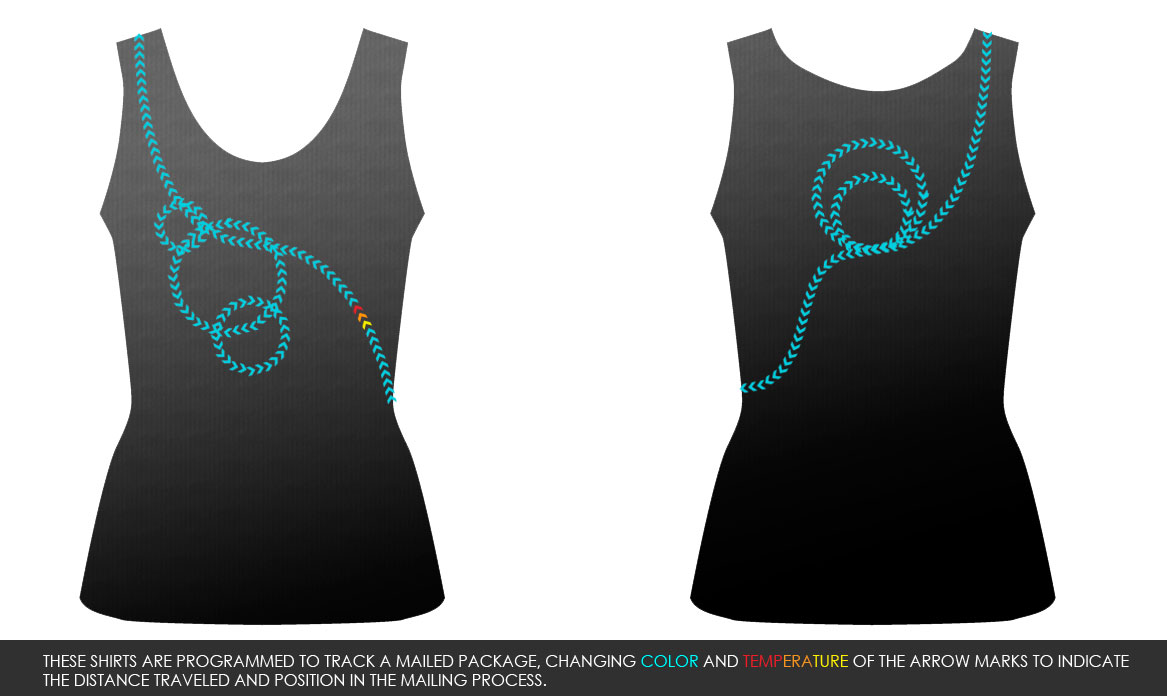
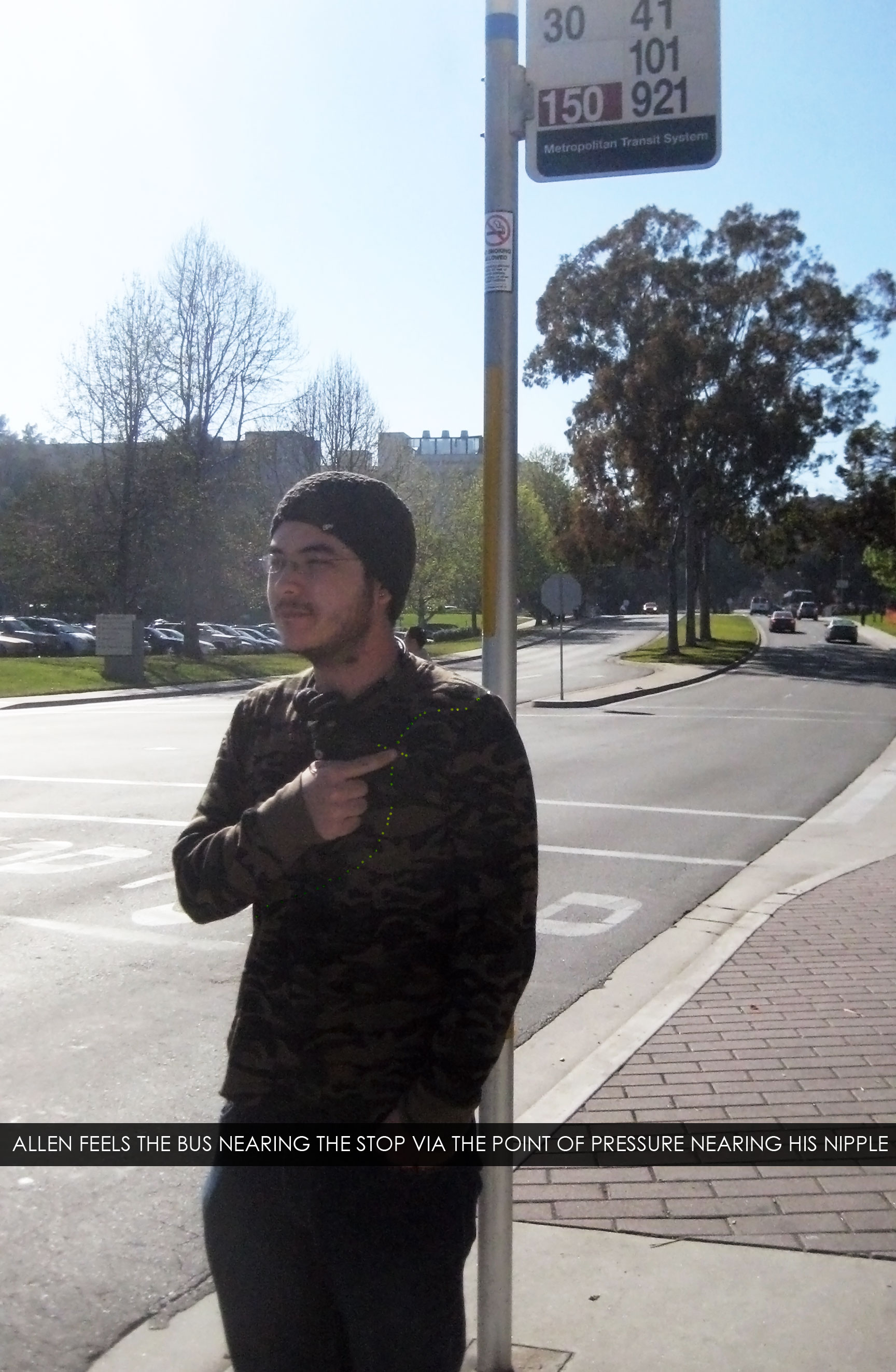

The majority of us have become lost at one point in our lives. Sometimes what guides us back to the set path is a sense of direction. A sense of direction is an intuitive feeling about which way to go. “Penfield’s Route” materializes the idea of “a sense of direction” by allowing one to physically feel the pathway of travel. The name “Penfield” is a reference to neurologist Dr. Wilder Penfield who researched maps of the somatosensory and motor cortex. “Penfield’s Route” plays with the idea that any surface can become a screen. The skin becomes a type of visceral screen for displaying data related to travel. Public transportation data and common pathways are mapped onto the body; a stoplight could be the left elbow, and the destination the right nipple. Since different areas of the body have a finer resolution of touch, they may be suited for more densely populated maps (for example a route through downtown could be conveyed through a point of pressure moving along the fingers), while body parts with lower resolution sense of touch may accommodate volume information such as traffic levels.